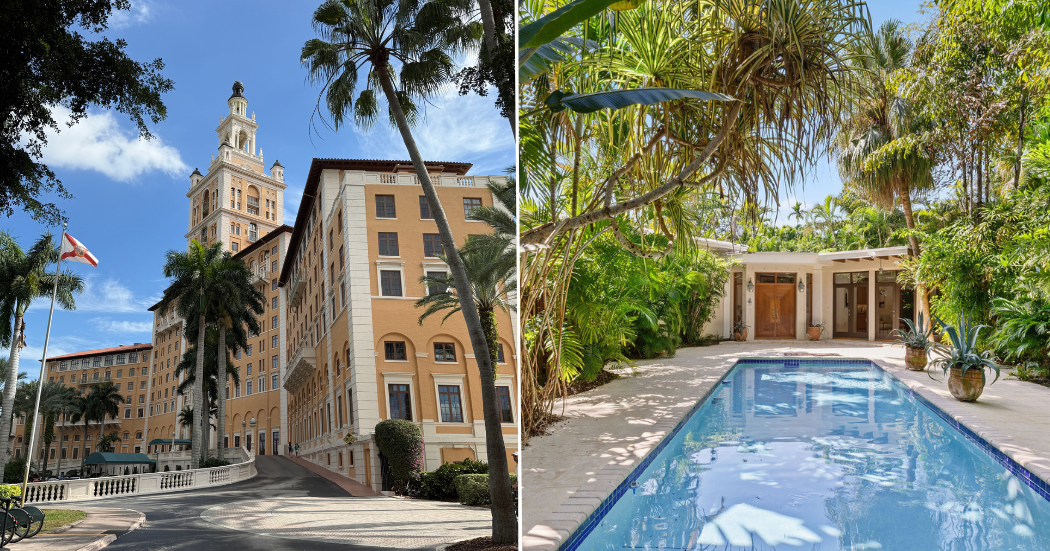
Trying to decide between Coral Gables and Coconut Grove — and wondering which one would actually fit the way you want to live?
They are neighbors. They are both known for beautiful homes, mature landscaping, excellent dining, and some of the most desirable residential streets in South Florida.
But living in them can feel completely different.
Coral Gables tends to feel more polished, planned, and architectural. Coconut Grove feels more tropical, organic, and relaxed.
Neither is automatically better. The right choice comes down to how you want to live. Here are some of the biggest differences buyers should consider.
Overall Feel: Polished vs Tropical
This may be the easiest distinction to notice.
Coral Gables was intentionally planned, and that still shows today. The city is known for Mediterranean-inspired architecture, landscaped boulevards, fountains, plazas, tree-lined streets, and carefully maintained residential areas.
There is a sense of order and permanence to Coral Gables.
Coconut Grove, on the other hand, feels much more organic.
The Grove is Miami's oldest neighborhood, and its streets wind through dense tropical landscaping, mature trees, historic properties, modern homes, and pockets that can feel almost hidden from the rest of the city.
The atmosphere is generally more casual and eclectic.
If Coral Gables feels like a beautifully planned city, Coconut Grove can feel more like a tropical village tucked into Miami.
Homes and Architecture
Both neighborhoods offer exceptional real estate, but the housing stock is very different.
Coral Gables
Coral Gables is especially known for:
-
Mediterranean Revival homes
-
Historic residences
-
Traditional estates
-
Waterfront properties
-
Gated communities
-
New luxury construction
-
Condominiums near Downtown Coral Gables
Homes can range from charming older residences near the city's core to substantial waterfront estates in communities such as Gables Estates, Cocoplum and Old Cutler Bay.
Coral Gables is a strong fit for buyers who place a high value on architecture, lot size, established streetscapes, and a more formal residential environment.
Coconut Grove
Coconut Grove has an unusually varied architectural mix.
You may find:
-
Historic cottages
-
Mid-century homes
-
Tropical modern residences
-
Contemporary new construction
-
Townhomes
-
Luxury condominiums
-
Waterfront estates
Two homes located only a few blocks apart can have completely different architectural styles and settings.
That variety is part of the Grove's personality.
Walkability: It Depends Where You Live
Both areas offer walkable pockets, but neither should be treated as uniformly walkable.
Coral Gables
Downtown Coral Gables is centered around Miracle Mile, which serves as a major dining, shopping, entertainment, and business district.
Living close to Miracle Mile can make it possible to walk to restaurants, cafés, shops, and local events.
Move farther south into Coral Gables' larger residential neighborhoods, however, and the lifestyle becomes much more car-oriented.
Coconut Grove
Walkability is one of Coconut Grove's strongest lifestyle features, particularly around the Village Center.
Restaurants, cafés, shops, parks, and CocoWalk are clustered within a relatively compact area, and many residents can walk between everyday destinations.
If walking to coffee, dinner, parks, and shops is important to you, certain parts of Coconut Grove can be particularly appealing.
Dining and Shopping
This category is surprisingly close.
Coral Gables
Coral Gables offers a more traditional downtown dining and shopping district.
Miracle Mile and the surrounding streets have restaurants, sidewalk cafés, boutiques, theaters, and businesses, while Merrick Park adds another major luxury shopping and dining destination.
The atmosphere tends to feel polished and urban without feeling like Downtown Miami.
Coconut Grove
The Grove's dining scene feels more integrated into the neighborhood.
Restaurants and cafés spill onto sidewalks and patios around Main Highway, Commodore Plaza, CocoWalk, and the surrounding streets.
The difference is subtle:
Coral Gables feels more like going downtown for dinner. Coconut Grove often feels like dinner is part of the neighborhood itself.
Waterfront and Boating Lifestyle
This is one area where Coconut Grove's identity is particularly strong.
Coconut Grove sits directly along Biscayne Bay and has a long connection to sailing, marinas, and waterfront recreation.
Its waterfront parks and marinas are woven into everyday neighborhood life.
That does not mean Coral Gables lacks waterfront living.
Quite the opposite.
Some of Miami's most significant waterfront estates are located in Coral Gables, particularly within communities such as:
-
Gables Estates
-
Cocoplum
-
Tahiti Beach
-
Old Cutler Bay
-
Gables by the Sea
But in Coral Gables, the waterfront experience is often more residential and private.
In Coconut Grove, the bay is part of the broader neighborhood lifestyle. In Coral Gables, waterfront living is often concentrated within individual homes and private communities.
Privacy and Gated Communities
If gated estate living is high on your wish list, both Coral Gables and Coconut Grove offer compelling options — but the experience is somewhat different in each neighborhood.
South Coral Gables is particularly well known for its established gated and guard-gated communities, many offering waterfront estates, larger properties, private roads, marinas, and varying levels of security. For buyers specifically seeking a larger guard-gated neighborhood with a broader selection of homes, Coral Gables generally provides more options to compare.
Coconut Grove also has several highly exclusive gated communities, although they tend to be smaller and more intimate. In South Grove especially, buyers will find enclaves such as The Moorings, Entrada Estates, Hughes Cove, Camp Biscayne, Four Way Lodge Estates, and The Anchorage, many with waterfront homes, private docks or direct Biscayne Bay access. The Cloisters on the Bay offers another gated option closer to the heart of Coconut Grove, with luxury villas rather than traditional estate homes.
The difference is less about whether gated living exists and more about scale and character: Coral Gables offers a greater concentration of larger gated neighborhoods, while Coconut Grove’s gated communities tend to feel more boutique, secluded, and closely integrated into the Grove’s lush residential landscape.
Lot Sizes and Outdoor Space
This can vary tremendously within both neighborhoods.
Coral Gables generally offers more opportunities for buyers seeking larger traditional estate lots, particularly as you move south toward Old Cutler Road and the gated communities.
Coconut Grove often has more irregular lots because of the neighborhood's age and organic street layout.
That can be part of the charm.
Some Grove properties feel almost hidden behind dense tropical landscaping, while others maximize smaller lots with contemporary architecture, courtyards, pools, and indoor-outdoor living.
Historic Character
Both communities have enormous historical significance, but they express it differently.
Coral Gables' history is largely reflected in its planned architecture and Mediterranean Revival identity.
Coconut Grove's history feels more layered.
The Grove is Miami's oldest neighborhood, and historic locations, older homes, longtime commercial buildings, and winding streets remain woven into the modern neighborhood.
For buyers who enjoy architectural variety and neighborhoods that evolved over generations, Coconut Grove can feel particularly distinctive.
The Commute and Location
One reason both areas remain so desirable is their location.
Coral Gables and Coconut Grove provide relatively easy access to:
-
Brickell
-
Downtown Miami
-
Miami International Airport
-
University of Miami
-
South Miami
-
Pinecrest
Coconut Grove also offers Metrorail access, which can be an important consideration for certain commuters.
Actual commute times can vary considerably depending on the exact property and Miami traffic, so I always recommend evaluating the specific address rather than the neighborhood name alone.
Coral Gables May Be Right for You If...
You may naturally gravitate toward Coral Gables if you prefer:
-
More traditional architecture
-
Larger estate properties
-
Gated community options
-
Private waterfront homes
-
Streets with Sidewalks
-
Wide, landscaped residential streets
-
A polished and established atmosphere
-
Downtown dining and shopping around Miracle Mile
-
A more structured neighborhood feel
Coconut Grove May Be Right for You If...
You may naturally gravitate toward Coconut Grove if you prefer:
-
Lush tropical landscaping
-
A more relaxed neighborhood atmosphere
-
Architectural variety
-
Walkability around the Village Center
-
Waterfront parks and marinas
-
Sailing and boating culture
-
Sidewalk cafés and outdoor dining
-
A neighborhood with a more organic, eclectic character
The Biggest Difference Between Coral Gables and Coconut Grove
For many buyers, the choice really comes down to atmosphere.
Coral Gables feels more refined and structured. Its broad streets, historic architecture, gated enclaves, and established residential sections give it a more formal feel.
Coconut Grove feels more relaxed and spontaneous. The winding streets, dense tropical canopy, cafés, marinas, and mix of architectural styles create a neighborhood that feels less planned and more naturally evolved.
Both offer luxury homes.
Both offer waterfront living.
Both have excellent restaurants.
Both put you close to central Miami.
The difference is often less about what each neighborhood has and more about how each neighborhood feels when you spend time there.
So, Coral Gables or Coconut Grove?
It comes down to what feels right when you are actually there.
Someone who loves the architectural elegance and wide residential streets of Coral Gables may not want the more eclectic atmosphere of Coconut Grove.
Someone who loves walking beneath the canopy in the Grove, grabbing coffee and continuing toward Biscayne Bay may find Coral Gables a little too formal.
And some buyers genuinely love both.
That is why I encourage clients to spend time in each neighborhood—not simply tour houses.
Have lunch. Walk the streets. Drive home at 5:30 in the afternoon. Grab coffee on a Saturday morning. See what everyday life actually feels like.
The house matters.
But when you are choosing between Coral Gables and Coconut Grove, the neighborhood may matter just as much.
Thinking About Moving to Coral Gables or Coconut Grove?
You don't have to decide based on an online list.
The best way to choose between Coral Gables and Coconut Grove is to understand the individual pockets within each community.
A home near Miracle Mile offers a very different lifestyle from an estate in South Coral Gables.
Likewise, living in the Village Center of Coconut Grove feels very different from owning a secluded property in South Grove.
After more than 20 years working in the Miami real estate market, I can help you compare not only properties, but the streets, communities, lifestyle, access, and everyday details that can determine whether a neighborhood truly fits you.
Work with Lisa Fox | Coldwell Banker Realty
Whether you are looking to buy, sell, or relocate anywhere across Coral Gables, Coconut Grove, Pinecrest, Doral, or greater South Florida, I am here to help you navigate the local market with confidence.
Lisa Fox | Coldwell Banker Realty
📍 Serving Coral Gables, Coconut Grove, and South Florida Real Estate
Call or text me at 305-345-8153 or email Lisa@LisaFox.com.
🌐 Explore Homes at CoralGablesHomeSearch.com